This describes the usual sequence in the leaf trade. Where we do something particular at our own depot, we say so. Everything else is general industry practice and individual processors vary.
The six processing steps
1. Receiving and grading
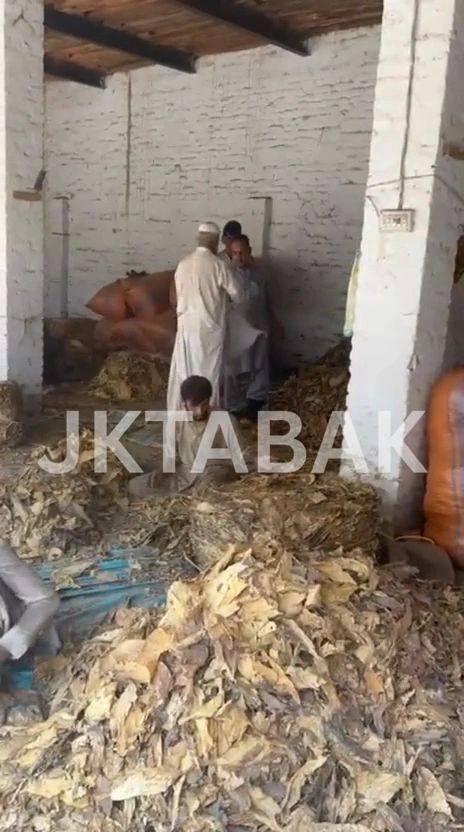
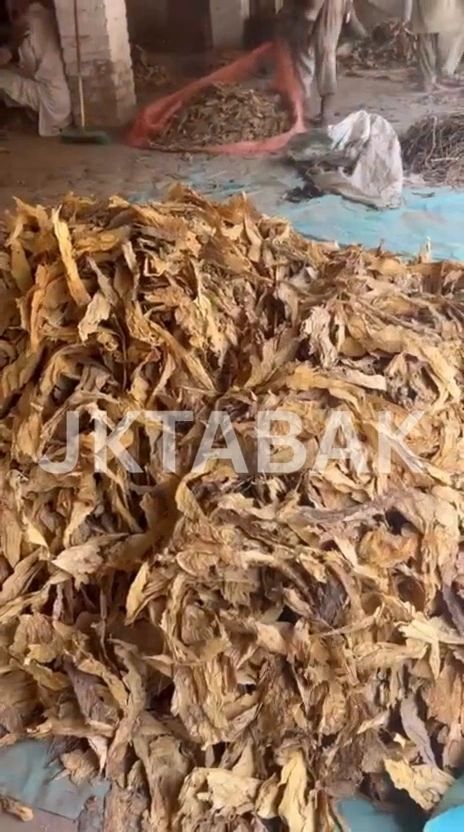
Cured leaf arrives in bundles or bales. It is sorted by type, colour, size and condition, and unsuitable leaf is set aside. The grade assigned here sets everything that follows.
2. Conditioning
Cured leaf is dry and brittle. Before it can be handled or stemmed without shattering, it is brought up to a working moisture, usually with humidified air or steam. Skip this step, or do it badly, and you get fines.
3. Stemming
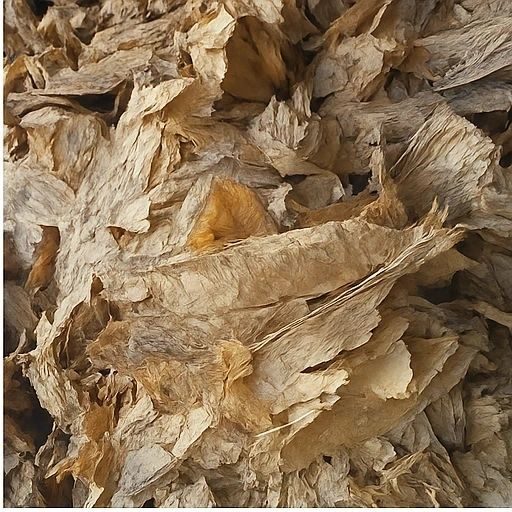
For stemmed forms, the central midrib is removed. We offer two routes. Hand-stemming pulls the midrib out of each leaf by hand, which keeps larger lamina pieces. Machine-stemming uses a mechanical line, which is faster and gives more even strip sizes. Loose leaf skips this step.
4. Re-drying and cooling
After stemming the leaf is dried back down to a moisture that is safe for storage and shipping, then cooled. If tobacco is packed too wet it can heat, mould and ferment in transit. Too dry and it breaks in the bag. The right figure depends on the type and destination and is something to put in the contract.
5. Packing
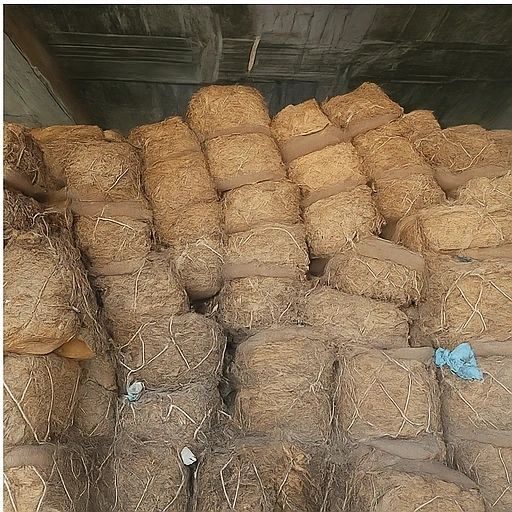
At our depot, loose leaf goes into jute bags and strips and scraps into C48 export boxes. Other trades use compressed bales or lined cartons. Packing affects how much you can fit in a container and how the leaf survives the voyage, so ask for net and gross weights per package.
6. Storage and loading
Packed leaf is stored dry and off the floor until it is loaded. Containers should be dry, clean and free of strong odours, since tobacco takes up smells. Some destinations require fumigation or treatment first.
Quality control and common problems
What a buyer can influence
- Form: loose, hand- or machine-stemmed
- Moisture at shipment, and the tolerance
- Stem and fines limits
- Packing type and package weight
- Whether you want loading photographs or an independent inspection
All of that is easier to agree before the price is set. Our standard terms are on the wholesale terms page.
Quality control points in the sequence
A good process is checked at several points, not just at the end. A buyer can ask what is checked and when.
| Stage | What is checked | What goes wrong if it is skipped |
|---|---|---|
| Receiving | Grade, colour, condition, moisture | Poor leaf enters the process |
| Conditioning | Moisture before stemming | Leaf shatters and makes fines |
| Stemming | Stem remnants, strip size, fines | Waste and defects in the final product |
| Re-drying | Moisture after drying | Mould in transit, or brittle leaf |
| Packing | Weight, labelling, package integrity | Wrong quantities, damaged goods |
| Storage | Humidity, pests, stacking | Spoilage and infestation |
| Loading | Container condition, load plan, seals | Taint, moisture damage, disputes |
Where yield is lost
Yield matters because tobacco is sold by weight and every kilogram lost between receiving and packing is a cost. The main losses are stems, which are removed on purpose; fines, which come from breakage; moisture, which is removed in drying; and rejected leaf. A good processor keeps fines low by conditioning properly, and sells stems and scraps as separate products so that nothing is wasted. You can see those products on our scraps and stems page.
Traceability and lot numbering
A lot is a defined quantity of one grade, which is treated as a unit for sampling, testing and documents. Each package should carry a lot number so that if a problem appears, the affected goods can be identified and the cause found. Lot numbers should appear on the packing list, on the packages and on the test certificate. If you receive a test result with no lot number, you cannot be sure it applies to your goods.
Hygiene and foreign matter
Foreign matter is one of the most serious quality problems, because a plastic fragment or a piece of metal in a leaf shipment can cause damage in the factory. Controls include clean floors and tables, covered storage, magnets or metal detection where used, careful packing materials and a rule that nothing is left on the leaf. Ask any supplier how foreign matter is controlled and what the limit is.
Common problems and their usual causes
| Problem | Usual cause | How a buyer can prevent it |
|---|---|---|
| Lots of fines | Leaf too dry when stemmed, or rough handling | Agree a fines limit; ask about conditioning |
| Mould in the bag | Packed too wet or stored damp | Agree a moisture limit; check on arrival |
| Uneven colour | Mixed lots or poor sorting | Ask for a single-lot shipment or a blended one |
| Stem remnants | Poor stemming settings | Agree a stem limit; check a sample |
| Insect holes | Pests in storage | Ask about storage and fumigation |
| Taint | Container or neighbouring cargo smells | Inspect the container; seal it |
Treatment, environment and timing
Fumigation and treatment
Some destinations require fumigation, and some shippers use it as a precaution against pests. Fumigation must be done by a licensed operator and followed by an aeration period, and a certificate is issued. It adds cost and time, so say if you need it. If you do not need it, say that too, since some buyers prefer untreated leaf.
Energy, fuel and the environment
Processing leaf uses energy. Curing barns burn fuel, redrying lines use heat, and conditioning uses steam. The environmental cost depends on the fuel: coal produces more carbon dioxide than wood from managed forests, while wood from unmanaged sources can contribute to deforestation. Buyers who report on their supply chain, or who face questions from their own customers, can ask suppliers about fuel and energy use. Better practices include efficient barns, managed-source wood or other lower-impact fuels, and capturing waste heat.
Waste streams
Processing produces by-products: stems, scraps, fines and dust, along with packaging waste. A good operation sells the tobacco by-products, as scraps and stems, for uses such as reconstitution, and disposes of unusable waste safely. See scraps and stems. Dust is a particular concern in the plant, because tobacco dust is a respiratory irritant and can be a fire and explosion risk, so extraction and cleaning matter for worker safety.
Why the sequence matters to you
A buyer does not need to run a processing line, but understanding the sequence helps you ask the right questions. If a lot has a lot of fines, ask about conditioning. If it is damp, ask about re-drying. If it has stem remnants, ask about the stemming settings. If it smells of something, ask about the storage and the container. Each symptom points to a step, and each step has someone responsible.
Why lead times are what they are
Processing leaf is a chain of steps, each with its own capacity. Conditioning needs time to let moisture spread evenly. Stemming, by hand or machine, is limited by labour or line capacity. Re-drying and cooling take hours. Packing and loading need containers and trucks booked in advance. A delay at any step delays the shipment, and a rush at one step can lower quality at the next. When a supplier gives you a lead time, it is usually the sum of these steps and the booking of the container. A shorter lead time is possible when the leaf is already prepared and packed, which is why ready stock is faster than made-to-order.
Moisture: a closer look
Moisture appears in every stage of leaf processing, so it is worth being precise. Leaf takes up and gives off water in response to the air around it, and settles to a level that depends on humidity. That level is called equilibrium moisture. Leaf stored in humid air will rise toward a high level and risk mould; leaf stored in dry air will fall and become brittle. At a given humidity, different leaf types settle at slightly different levels. This is why moisture at shipment is a contract term, why packing matters, and why the equilibrium value on a lot sheet is a useful reference.
Tobacco is harmful to health. JKTabak supplies tobacco leaf to licensed commercial buyers only (manufacturers, processors, importers and distributors). The buyer is responsible for confirming that import, purchase and resale of tobacco is lawful in the destination country.
Photos and video from our lots
Pictures and clips of leaf we handle. For current photographs or video of a specific lot, ask us. The full sets are on the gallery and videos pages.