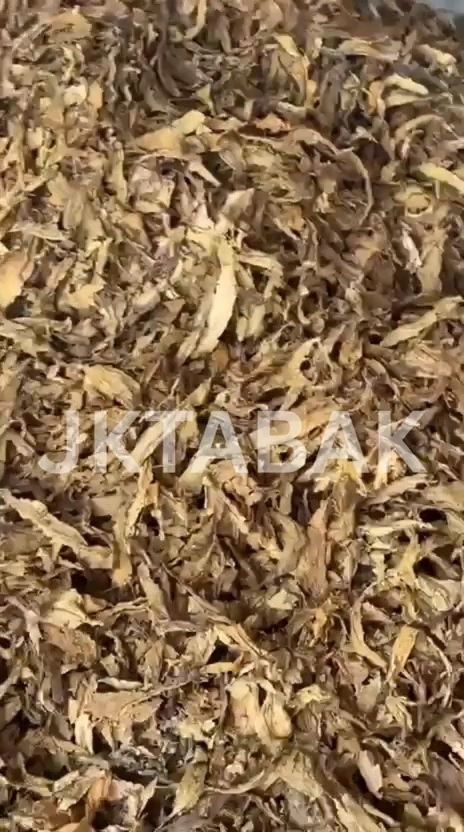
Prices from$8.00/kgFOB Karachi, indicative
- Minimum order: 1 container (about 20 t)
- Ready to pack and ship
- Sample on request, where lawful
- Export documents supplied
Grades you can order now
Indicative prices per kg, FOB Karachi. Minimum order one container. Confirmed in your quotation.| Grade | Form | Nicotine | Sugar | Available | $ / kg | |
|---|
| NDB | Strips | 2.5% | 9–11% | 180 t | 8.95 | Order |
|---|
| TND | Strips | 2.5% | 7% | 180 t | 8.10 | Order |
|---|
| MML | Strips | 2.5% | 9–11% | 200 t | 8.95 | Order |
|---|
| MML high-sugar | Strips | 2.6% | 13–15% | 50 t | 8.35 | Order |
|---|
| MMO | Strips | 2.5% | 9–11% | 200 t | 8.95 | Order |
|---|
Buyer’s guideBefore you order: what to know and what to check.
Machine-stemming and when to choose it
How machine-stemming works
A mechanical line separates most of the lamina from the central stem. It is faster and more repeatable than hand work, so strip sizes come out more even and large volumes become practical. The catch is that stem content, fines and moisture still have to be agreed for each order. Leaf that is too dry going into a threshing line breaks, and breakage shows up as fines.
The result is sold as machine strips. Every grade in the strips table can be supplied machine-stemmed.
Choose machine-stemmed if…
- you run industrial volumes and want standard strip sizes,
- you want material that is ready to cut or blend with minimal handling, or
- cost per kg of prepared leaf matters more than very large lamina pieces.
For closer selection and bigger pieces, see hand-stemmed.
Types available machine-stemmed
Packing and terms
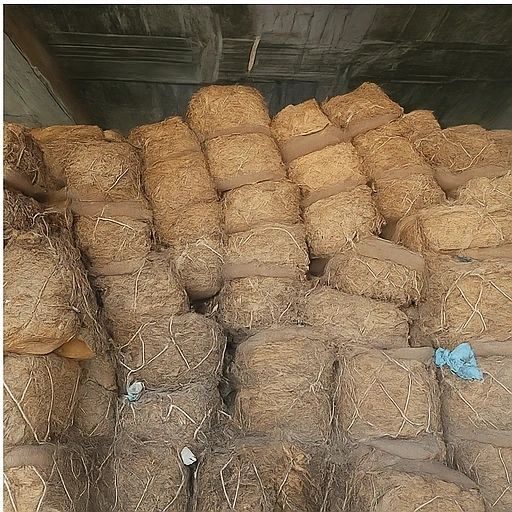
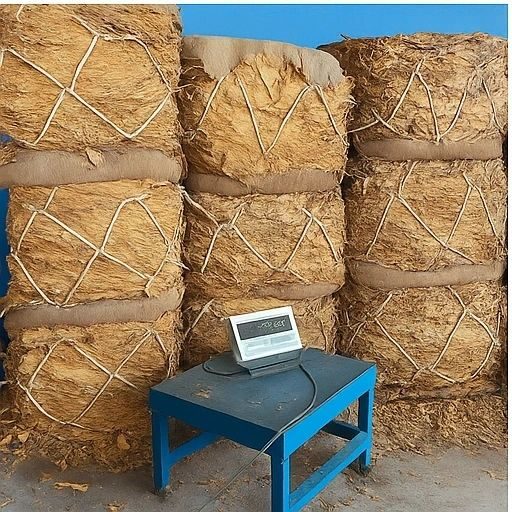
Strip grades are packed in C48 export boxes. Packing, samples, documents and payment are on the wholesale terms page.
How machine strips are made and who they suit
Inside a threshing and redrying line
Machine stemming is done in a threshing line, which separates leaf from stem in several stages. In outline, the leaf is conditioned to the right moisture, fed into a series of threshers and separators that tear the lamina away from the midrib, and then classified by air and screens into strips, stems and small pieces. The strips pass through a re-drier, which brings them down to storage moisture, and a cooler, and are then packed. The stem fraction goes to a separate stream and can be sold as stems (see our scraps and stems page).
What determines the quality of machine strips
- Conditioning. If the leaf is too dry going into the line, it shatters and produces fines. If it is too wet, the threshing is poor and stem remains.
- Thresher settings. Too aggressive and the lamina breaks into small pieces. Too gentle and the stem is not separated.
- Classification. The air and screens must remove stem and dust without carrying away good lamina.
- Redrying. Wrong moisture here is hard to fix later; it affects storage life and cutting behaviour.
- Blending. A lot is usually blended in bulk before packing, which improves consistency from box to box.
The numbers worth asking about
Specifications for machine strips| Parameter | What to ask for |
|---|
| Strip size distribution | A band, such as the share above a given size, and a reference sample |
|---|
| Residual stem | Maximum percentage by weight |
|---|
| Fines and dust | Maximum percentage by weight |
|---|
| Moisture | A target and a tolerance at shipment |
|---|
| Foreign matter | Zero tolerance or a defined limit |
|---|
| Lot consistency | Whether the lot is blended, and how many boxes it covers |
|---|
Who machine strips suit
- Cigarette and RYO plants that cut at high speed and need even strips.
- Manufacturers that want to minimise preparation and start cutting on arrival.
- Blenders who need to repeat a blend and want consistent strip size from order to order.
- Buyers who prefer a lower price per kilogram of prepared leaf than hand-stemming allows.
Samples, other types and choosing
Who should consider hand strips instead
- Makers of specialised or traditional blends that want larger pieces.
- Buyers who want the leaf selected by eye as it is stemmed.
- Smaller volumes where a line is not practical.
Our hand-stemmed page has the process, and the strips page compares the two forms.
What a good machine-stemmed sample looks like
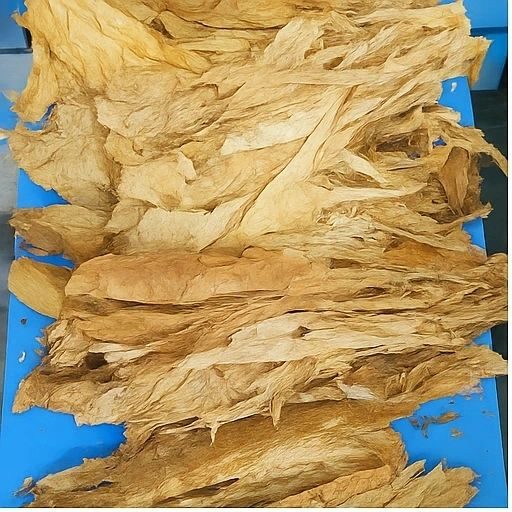
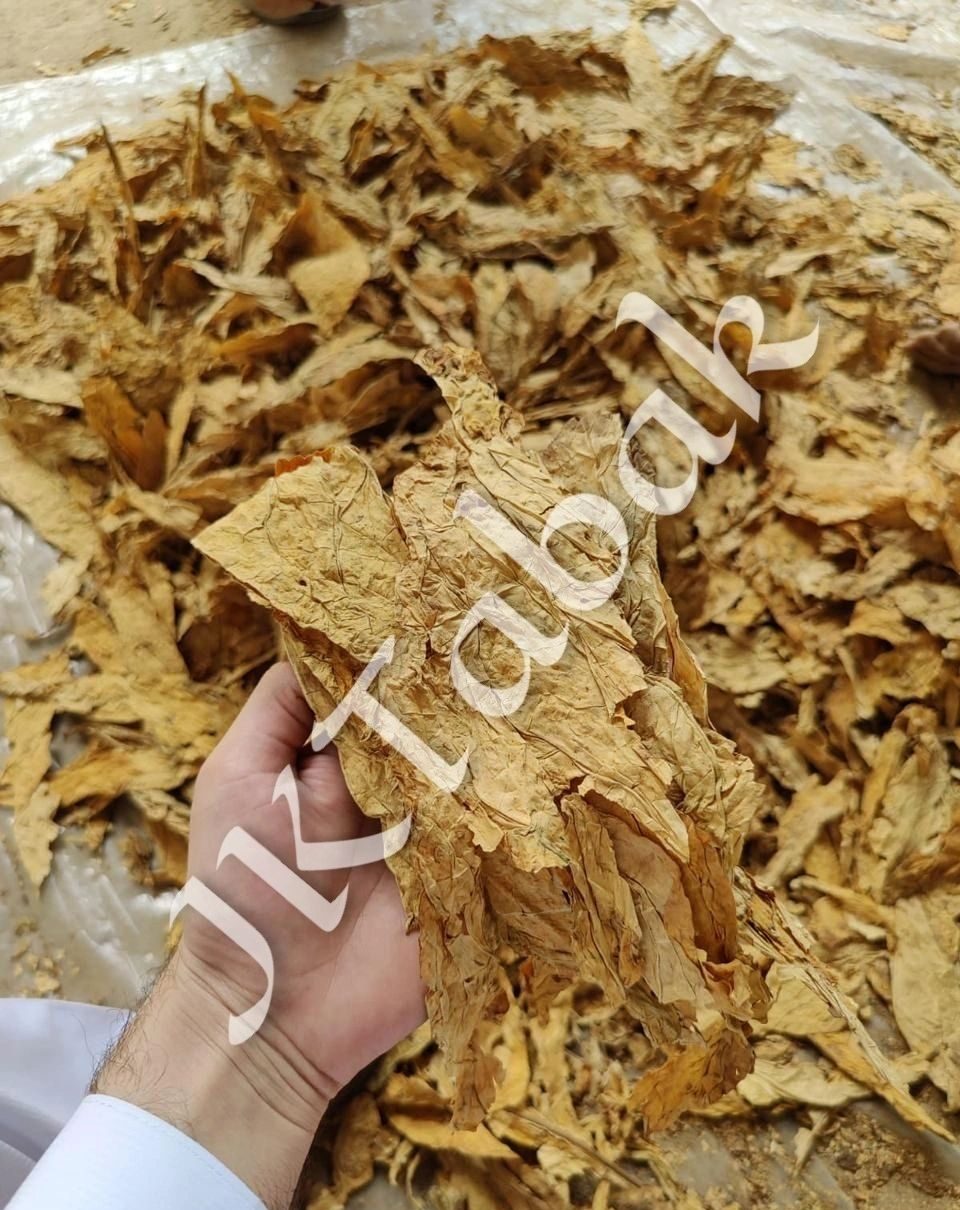
The strips should look like pieces of leaf, not dust. A handful should show a fairly consistent size, with little stem visible and few small pieces falling out when you shake it. The colour should be even. It should smell clean. If the sample is full of dust, or if you can easily find long pieces of stem, ask whether it is typical of the lot and what the limits are. Our processing guide explains why each of these appears.
Machine-stemmed leaf in other types
Machine stemming is applied to several types: FCV, burley, oriental, dark air-cured and rustica, as listed above. The same principles apply, but each type behaves differently. Burley, for instance, has thick, heavy stems and needs different settings from the finer oriental leaf. Tell us the type, and we will tell you what the form involves.
Choosing between hand and machine: a short decision guide
A rule of thumb. Test samples of both before deciding.| Question | If yes, lean towards |
|---|
| Do you cut at high speed and need even strips? | Machine |
|---|
| Is the appearance of the strip important in the final product? | Hand |
|---|
| Do you buy very large volumes at the lowest cost? | Machine |
|---|
| Do you want leaf selected by eye as it is stemmed? | Hand |
|---|
| Do you need short lead times for big quantities? | Machine |
|---|
| Is your product traditional, with a premium look? | Hand |
|---|
Using machine strips in your plant
Troubleshooting machine strips
If you receive machine strips and something looks wrong, these are the usual causes. The first step is to compare the leaf with the approved sample and the specification.
- Too many fines. Leaf was too dry going into the line, or the settings were too aggressive. Check the moisture at shipment and the fines limit in the contract.
- Stem in the strips. The settings did not separate stem properly. Compare with the agreed limit and with the sample.
- Uneven strip size. The lot may mix leaf from several sources, or the classification was loose.
- Damp or musty leaf. Re-drying was insufficient, or the packing was exposed to moisture. Check the moisture and the packaging condition.
- Colour variation. Mixed lots or sorting before the line was not done. Ask whether the lot was blended.
Document any problem with photographs and measurements and send them to us promptly, within the inspection period set in the contract.
Strip size classes
Strips are sometimes described by size classes, such as large, medium and small, with the share above or below a given size in each. There is no universal standard, so describe what you need: either a reference sample, or a percentage of strips above a stated length or mesh. An agreed method of measuring, such as screening a sample through a set of sieves, makes the numbers comparable.
Machine-stemmed leaf and the later steps in your plant
Machine strips are designed to slot into your process after conditioning and before cutting. They may still need a short conditioning step on arrival if the moisture is low or the leaf has been stored for some time. Run a test batch through your own equipment, since the interaction of strip size, moisture and cutter settings is specific to each plant.
Throughput, lead time and scheduling
A machine line processes a lot of leaf in a short time, but the line is shared, and lots are scheduled in batches. Lead time depends on the queue, the leaf on hand and the lot being prepared. If you order a large quantity, tell us when you need it and whether the date is firm. If you are planning a repeat order, tell us the pattern. Where we can plan the line ahead, the lead time shortens and the consistency improves, because similar lots are processed together.
Keeping lots consistent
A machine line can process a lot in a uniform way, but the leaf going in is variable. Blending leaf from different sources before processing, or blending finished strips afterwards, averages the variation and gives a steadier lot. Ask whether a lot has been blended, and how many packages it covers. A lot that is blended across all its packages is more consistent than one that is simply the sum of several different batches.
Writing a machine-strips enquiry
For a machine-strips enquiry, include: the grade or the nicotine and sugar range; the strip size band or a reference sample; the maximum stem and fines; the moisture target and tolerance; the packing; the quantity; the port; and whether the lot should be blended across all packages. With that information, we can tell you quickly whether a lot is close, and what a sample would show.
Tobacco is harmful to health. JKTabak supplies tobacco leaf to licensed commercial buyers only (manufacturers, processors, importers and distributors). The buyer is responsible for confirming that import, purchase and resale of tobacco is lawful in the destination country.
Sources and further reading
Frequently asked questions
Is machine-stemmed leaf lower quality?
Not by itself. It is a different form. Quality depends on the grade, how the leaf was conditioned and the tolerances agreed for stem, fines and moisture.
Where are the specifications?
Nicotine, sugar, quantity and indicative price per grade are in the
strips table.
What happens to the stems from machine stemming?
They are separated and can be sold as stems, which are used in reconstitution and other industrial processes.
Why do machine strips sometimes contain dust?
Dust comes from leaf that was too dry or from rough handling in the line. Agree a maximum fines percentage in the contract.
Where can I buy machine-stemmed tobacco in bulk?
Industrial buyers can order machine-stemmed tobacco by the container direct from JKTabak, an exporter operating from Swabi in Pakistan and Oudenaarde in Belgium. Every grade in our strips table can be supplied machine-stemmed, which gives even strip sizes for large cutting lines. Tell us your grade and tonnage on the
quote request page and expect a written offer back.
Where can I buy top quality machine-stemmed tobacco strips wholesale?
For top quality machine strips, look for a supplier that publishes its specification. JKTabak lists nicotine, sugar, available quantity and indicative price for each grade, and will agree stem, fines and moisture limits in writing. Our FCV, Burley and dark air-cured strips are offered this way. Browse the full
strips list and choose the grade that matches your product.
Who supplies machine-stemmed tobacco strips for large factories?
JKTabak does, and large factories are a natural fit because machine stemming gives repeatable strip sizes in volume. We have exported raw tobacco leaf for 20 years and deal only with licensed manufacturers, processors and importers. Rather than relying on a name, compare offers on written specifications and a pre-shipment sample. Our
wholesale terms explain how an order works.
How much does machine-stemmed tobacco cost per kg?
Indicative machine-stemmed FCV strip prices range from about $8.00 to $8.95 per kg FOB Karachi, with F8 Lemon at the low end and NDB, MML and MMO at the top. The exact price is confirmed in the written quotation and depends on grade, crop and quantity. The
price list shows each grade, and the wider indicative range is $8–12 per kg.
How much does a container of machine-stemmed tobacco cost?
A container carries about 20 tons, so at indicative strip prices of $8.00 to $8.95 per kg the leaf alone comes to roughly $160,000 to $179,000 before freight, insurance and import duty. Your actual figure depends on the grade and is fixed only in the quotation. Send the grade you want via
our form for a precise number.
What is the minimum order for machine-stemmed tobacco?
We accept orders from a single container, around 20 tons, and nothing smaller. Machine strips ship in C48 export boxes, with the box weight and count given in the quotation. A mixed load of grades may be possible, so describe your plan when you write in. Buyers wanting a smaller trial first can ask about a lawful sample, which is sent on request.
Can I get a sample of machine-stemmed tobacco?
Yes, a sample can be sent on request where the law of your country allows it. Give us the grade, your company details and a delivery address, and we will tell you what is possible. Check strip size distribution, fines, residual stem and moisture on the sample before you plan a full container. Start from the
contact page.
How is machine-stemmed tobacco packed and shipped?
The strips pass through a re-drier and cooler, and are then packed into C48 export boxes. Two high-sugar lots are packed in jute bags instead. Boxes are loaded into a shipping container and priced FOB Karachi. Dry packing matters, because moisture decides how well strips keep and how much they break at your cutter. Terms are on the
export and import page.
Which machine-stemmed grade is best for cigarettes?
NDB and MML are the usual starting points for cigarettes. Both are FCV strips with 2.5% nicotine and 9–11% sugar, giving a clean, medium-sweet body, while TND offers a firmer, lower-sugar profile with 7% sugar. Machine stemming helps keep sizes even for high-speed cutting. Describe your target blend and we can narrow the shortlist for you.
Which machine-stemmed tobacco should I use for roll-your-own?
MMO is the aromatic strip commonly chosen for roll-your-own and cigarette fillers, and MML offers balanced sweetness for general blending. Even strip sizes from a machine line make shred quality easy to control. Test samples of both in your recipe. The
strips table shows nicotine, sugar and price side by side.
Is machine-stemmed tobacco used for shisha?
Yes, high-sugar strips are the usual base for shisha. MML high-sugar and MMO high-sugar each carry 13–15% sugar and can be supplied machine-stemmed, packed in jute bags. They suit molasses-style and sweet blends. For more on this segment see the
shisha tobacco page, then request a quotation on the lot you prefer.
Where can I buy cheap machine-stemmed tobacco in bulk?
Choose value grades and bulk volume. F8 Lemon is the lowest-priced FCV strip at about $8.00 per kg, and TND follows at about $8.10 per kg, both indicative FOB Karachi. Cheap should still mean a written specification, so agree stem, fines and moisture before shipping. If cost per kg is your priority,
ask for a comparison across these grades.
Can I buy machine-stemmed tobacco from Pakistan for my plant in Europe?
You can, provided your company is licensed to import tobacco where it operates. JKTabak ships from Pakistan and keeps an office in Oudenaarde, Belgium, so European buyers have a closer contact point. Prices are FOB Karachi, leaving freight and duties for you to plan. Read the
export and import notes before you request your quote.
How do I import machine-stemmed tobacco into my country?
Check three things first: that your business holds the licence needed to import raw tobacco, what customs and excise rules apply, and who handles freight and clearance. We handle the export side and provide the commercial paperwork. Because rules vary widely between countries, take advice from a local customs broker, and use our
import guide to prepare questions.
What documents come with machine-stemmed tobacco?
Export documents are supplied for each shipment, commonly including the commercial invoice, packing list and shipping papers used for customs. If your authority wants something additional, such as a certificate of origin, state it in the enquiry so the quotation covers it. We only commit to documents agreed beforehand, so list your requirements at the start.
How do I check moisture and stem content of machine-stemmed tobacco?
Measure moisture with an analyser or oven test on a sampled box, and measure stem by sorting a weighed sample by hand and dividing stem weight by the whole. Do the same for fines using a screen. Machine strips can hold more stem and fines than hand strips, so limits belong in the contract. Compare your result with the agreed figure on arrival.
What is the difference between machine-stemmed and hand-stemmed tobacco strips?
Hand strips are pulled leaf by leaf, giving larger pieces and close visual selection. Machine strips come from a threshing line, giving more even sizes and the capacity for large volumes, with stem and fines to be agreed per order. The grades are the same either way. See the
hand-stemmed page for the other side.
Can I buy machine-stemmed tobacco online?
You can begin online, though wholesale tobacco is sold by written quotation, not through a basket. Choose a grade, click Order on its row or visit the
contact page, and give us your tonnage and destination. We reply with an offer and the shipment follows once terms are agreed. This route is for licensed businesses only.
Is machine-stemmed tobacco good as filler in a blend?
Yes, machine strips are widely used as filler because they are uniform and ready for the cutter. BITS, our smaller strip pieces, is described for processing and filler use, and MMO is described for cigarette and RYO fillers. Match the grade to the sugar and strength you want in the final product, and test a sample in your own blend before ordering a container.
Which tobacco types can I get machine-stemmed?
We list FCV and Virginia, Burley, Oriental for blending, dark air-cured and Rustica as available machine-stemmed, and custom blends on request. FCV has the widest choice of strip grades. Check each type on its page, such as
Virginia or
Burley, and then confirm current availability with us.
Do you sell machine-stemmed tobacco to small buyers or individuals?
No. JKTabak sells only to licensed tobacco manufacturers, processors and importers, with a minimum of one container. Individuals and retail shops are outside our business. If you represent a registered company with the right licence and need that volume, send a brief message through the
contact page and we will respond with next steps.