- Minimum order: 1 container (about 20 t)
- Ready to pack and ship
- Sample on request, where lawful
- Export documents supplied
| Grade | Material | Nicotine | Sugar | Crop | Available | Packing | Price / kg | Typical use | |
|---|---|---|---|---|---|---|---|---|---|
| F8 | FCV scraps | 2.5% | 9–11% | 2025 | 60 t | C48 box, 140 kg | 7.85 | By-product of hand-stripped and whole leaf; budget blends, reprocessing. | Order |
| F12 Lemon | FCV scraps | 2.5% | 7% | 2025 | 140 t | C48 boxes | 8.70 | Bright-colour scraps; reprocessing, filler expansion. | Order |
| F09 Dark | FCV scraps | 2.5% | 7% | 2025 | 140 t | C48 boxes | 8.30 | Deep-colour scraps; low-cost filler. | Order |
| LSM | FCV long stem | 2.5% | – | 2025 | 150 t | C48 boxes | 8.20 | High-fibre stem; sheet and reconstitution. | Order |
| MSM | FCV mixed stem | 2.5% | – | 2025 | 150 t | C48 boxes | 7.00 | Blended stem types; cost-effective bulk. | Order |
What scraps are, where they come from and how they are used
What scraps and stems are
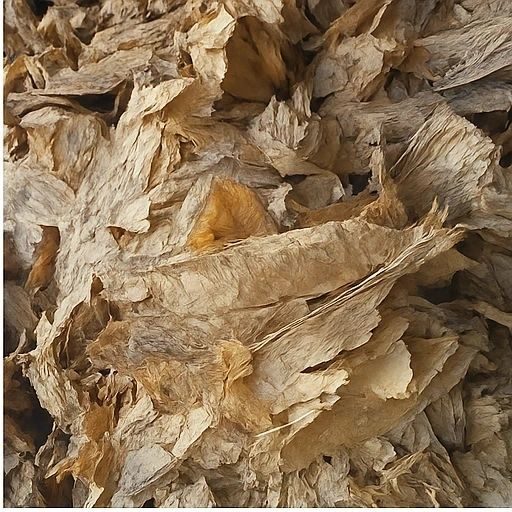
Scraps are the small lamina pieces left over from hand-stripping and whole-leaf work. Stems are the midribs that have been taken out. Both are real tobacco, and they are bought where cost per kg matters more than how the leaf looks: reprocessing, reconstituted sheet, filler expansion and budget blends.
A low price does not make a grade suitable. Judge scraps on what is actually in the box: fines, stem and fibre percentage, moisture, foreign matter and chemistry.
Choosing a grade
- F8 is scrap from hand-stripped and whole-leaf processing, with medium sugar. It suits budget blends and reprocessing.
- F12 Lemon and F09 Dark have the same nicotine and differ in colour, for colour-sensitive filler.
- LSM (long stem) and MSM (mixed stem) are high-fibre material for sheet and reconstitution.
Prefer cut-ready leaf? See strips or loose leaf. Terms: wholesale terms.
Where scraps and stems come from
In any leaf processing operation, a share of the material is not usable as whole strips. Scraps are the small lamina pieces left from hand-stripping and whole-leaf handling, and from the threshing line. Stems are the central midribs that have been removed from the leaf. Neither is waste in the commercial sense: both are sold as raw material for processes that do not need large pieces.
What scraps and stems are used for
- Reconstituted tobacco sheet. Scraps, fines and stems can be ground and turned into a sheet by a paper-making or casting process. The sheet is then cut and blended into cigarettes and other products. It lets manufacturers use the whole tobacco plant and control some properties, such as the sugar and nicotine in the sheet.
- Expanded stem and filler. Stems can be processed, expanded and cut into a filler that adds volume to a blend at a lower cost.
- Budget blends. Scraps of a decent grade can be used directly in value-segment products.
- Reprocessing. Some plants re-run scraps through their own lines to recover lamina.
Judging, grading and ordering
How to judge a lot of scraps
A lower price is only a saving if the material suits your process. Look at:
| Check | Why it matters |
|---|---|
| Fines and dust content | Very fine material is hard to handle and loses yield |
| Stem and fibre percentage | Stem content changes the chemistry and the processing |
| Moisture | Affects handling, storage and weight |
| Foreign matter | Sand, twine and plastic cause equipment damage and product defects |
| Colour and grade of origin | Light lemon scraps and dark scraps behave differently in the final product |
| Nicotine and sugar | These carry through to the sheet or blend |
Grades we list and how they differ
Our scraps list includes F8, F12 Lemon and F09 Dark, and two stem grades, LSM (long stem) and MSM (mixed stem). F8 is the scrap from hand-stripped and whole leaf processing; F12 Lemon and F09 Dark let you choose by colour; the stems are for fibre-rich applications. Details and indicative prices are in the table at the top of this page.
Packing and handling
Scraps and stems are packed in C48 export boxes, and the F8 grade is listed at 140 kg per box. Because the material is light and dusty, the boxes should be kept dry and handled with care. If your process is sensitive to dust, ask about dust limits in the specification.
Regulation
Tobacco refuse is classified under its own subheading in the Harmonized System (2401.30), and customs treatment in some countries differs from that for leaf. Because of this, and because some uses of tobacco waste are regulated, confirm the requirements with your broker before ordering. Our compliance notice gives our usual codes.
How to order scraps
Tell us the grade or colour, the quantity, the specification limits for fines and moisture, and the intended use. We will answer with the lot we can offer, a sample from it and an indicative price. See the wholesale terms for packing, documents and payment. If you want cut-ready leaf instead, look at the strips or loose leaf pages.
Processing and quality control
How reconstituted sheet is made
Reconstituted tobacco is one of the main uses of scraps, fines and stems, so it is worth understanding what the process asks of the raw material. In outline, the material is extracted with water to separate the soluble part from the fibre. The fibre is formed into a sheet, in a process similar to papermaking, and the extract is concentrated and added back to the sheet. In another approach, the ground tobacco is mixed with a binder and cast into a sheet. The sheet is dried, then cut and blended with leaf. The properties of the sheet, including its nicotine and sugar, can be controlled by the formulation.
Because the process grinds and extracts the tobacco, appearance is irrelevant. What matters is chemistry, fibre content, cleanliness and cost. That is why buyers of scraps ask for numbers on nicotine, sugar, moisture and foreign matter rather than for colour and size.
Expanded stem
Stems are fibrous and dense. Cut as they are, they burn poorly and add little. To make them useful as filler, some manufacturers soften and expand them, using steam or other expansion methods, and then dry and cut them. The result is a lighter, more flexible material that adds volume to a blend. If you plan to expand stems, ask about their moisture and cleanliness, since sand and other foreign matter are particular problems for stem.
Sieve analysis for scraps
A simple way to describe scraps is by sieve analysis. A sample is passed through a stack of sieves of decreasing mesh size, and the share retained on each is weighed. The result tells you how much is coarse, medium and fine. Agree the sieve sizes and the maximum share of fines in the contract, and test a sample at arrival.
Protecting your plant from contamination
Scraps and stems are often handled by machines that grind or press them, so foreign objects such as metal, stones or plastic can damage equipment as well as spoil the product. Ask how the material is cleaned and sorted, whether metal detection or magnets are used, and what the contract says about foreign matter. A magnet and a visual check of a sample at arrival are cheap defences.
Price, storage and enquiries
What drives the price of scraps
- The grade of leaf they came from; scraps from better leaf are worth more.
- Cleanliness and fines content.
- Nicotine and sugar content.
- Moisture, since you pay for water by weight.
- Demand from reconstitution plants, which varies.
Storing scraps and stems
Scraps and stems are light, dusty and absorb moisture quickly, so storage matters. Keep the boxes dry and off the floor, away from walls and sources of damp. Stack them so that they do not collapse, and rotate stock. Because of the dust, store them in a clean area with ventilation and avoid ignition sources; fine tobacco dust can burn. Keep a record of the lot on each box, so that any problem can be traced.
An enquiry for scraps, step by step
State the grade or colour you want, and say what the material is for, since reconstitution, expansion and blending need different qualities. Give maximum limits for fines, foreign matter and moisture. Say whether you need sieve analysis. Ask for a sample, and test it on your equipment before ordering a container.
Tobacco is harmful to health. JKTabak supplies tobacco leaf to licensed commercial buyers only (manufacturers, processors, importers and distributors). The buyer is responsible for confirming that import, purchase and resale of tobacco is lawful in the destination country.
Photos and video from our lots
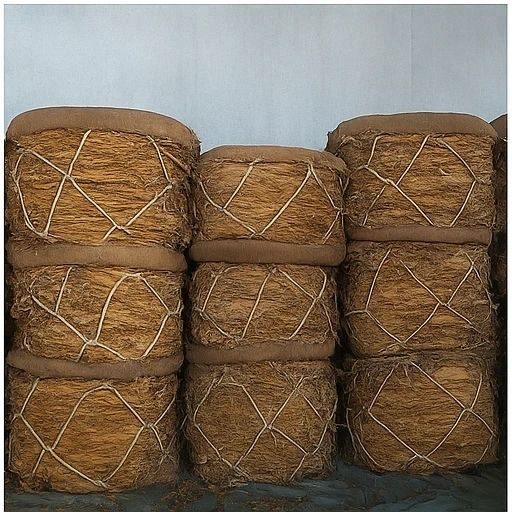
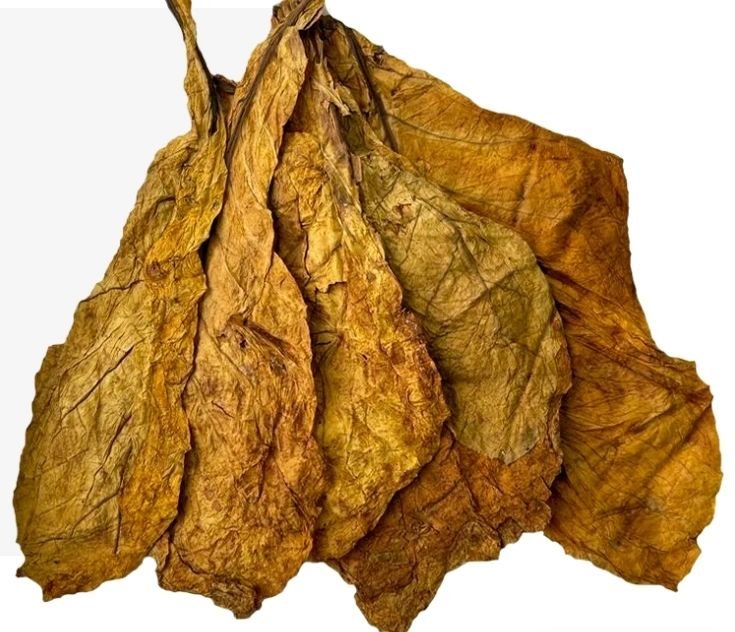
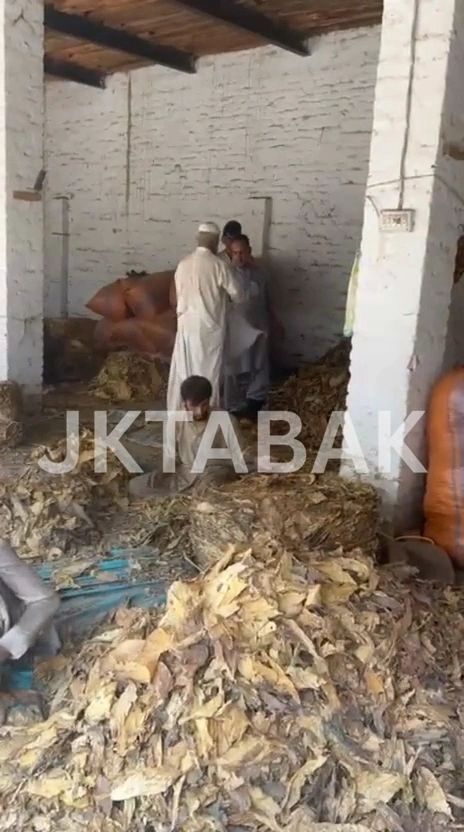
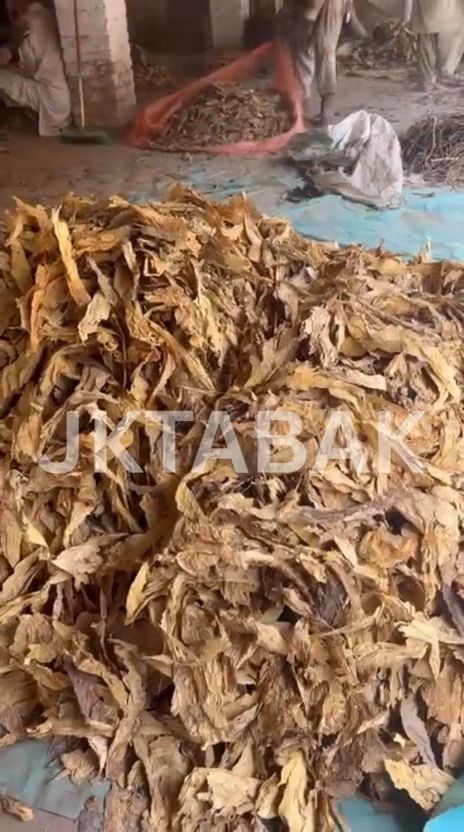
Pictures and clips of leaf we handle. For current photographs or video of a specific lot, ask us. The full sets are on the gallery and videos pages.